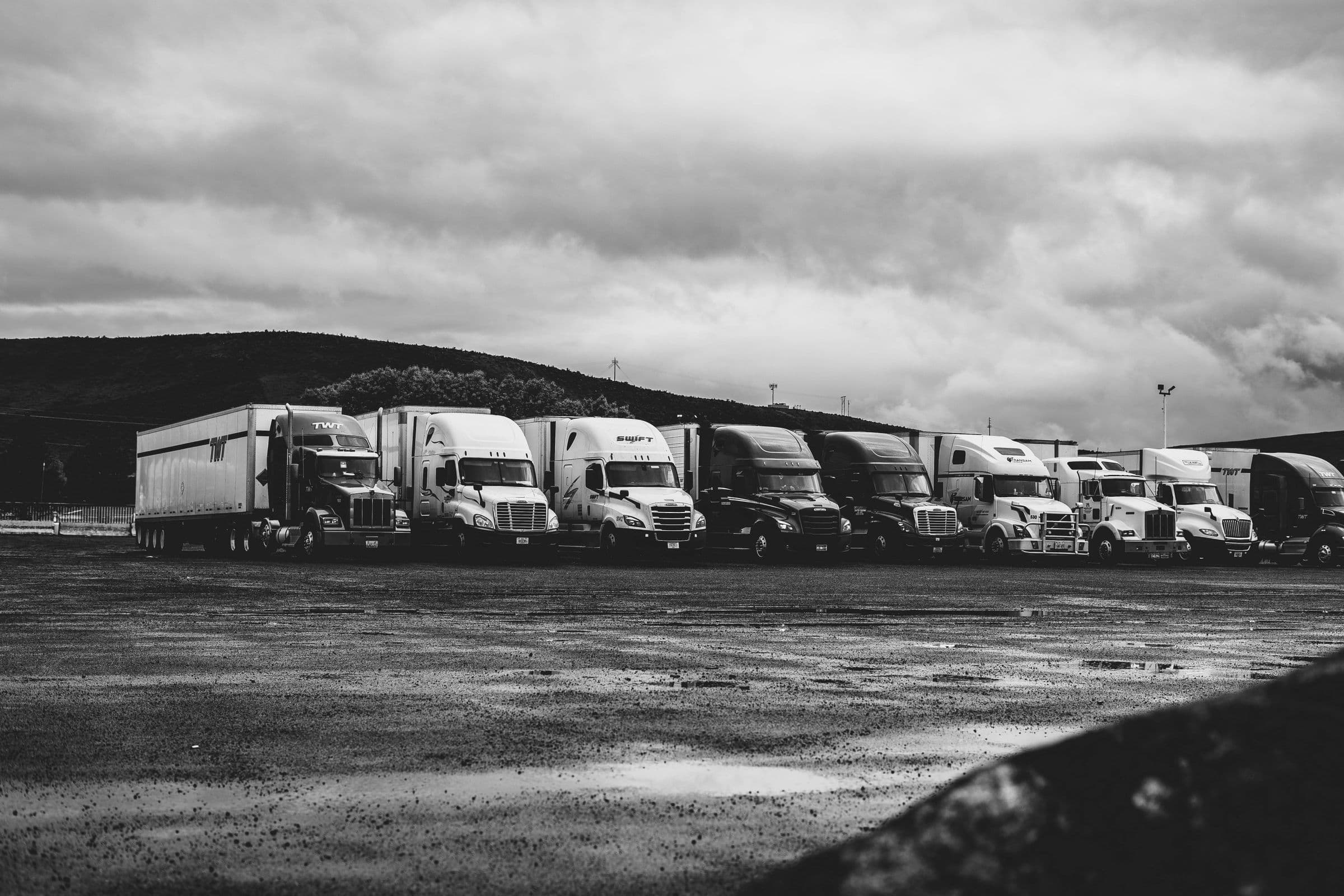
Between late August and 21 September, sixteen trucking, delivery and transportation companies filed for bankruptcy, eight under Chapter 11 and eight under Chapter 7, according to FreightWaves' count of the court dockets. The cause it names is "rising diesel fuel prices and other elevated operating costs." Most were small. Nine ran between one and six trucks. The largest were not: Expedite Express of Ave Maria, Florida, with 114 power units and a suspension of its operating authority scheduled for 30 September; Globemaster of Bolingbrook, Illinois, with 51; Xoco Transport of Hidalgo, Texas, with more than 40 tractors and about 70 trailers; T Yorkman Trucking of Midland, Texas, about 39 oilfield water and vacuum trucks, in Chapter 7; Mill Creek Logistics of Lenexa, Kansas, with 24; CLJ Transporting of Auburndale, Florida, with 18; and Jett Transport of Somerset, Texas, with 14 trucks and 14 trailers.
Separately, Sparhawk Trucking of Wisconsin Rapids, in Chapter 11 since March, is shutting down after failing to find a buyer and "liquidating assets" including its equipment, with layoffs running from 8 September into November and 10.1 million dollars reportedly owed to its lender.
Why now
Diesel. The national average reached a record 6.529 dollars a gallon in the week of 21 September and eased to 6.382 the week after, still 2.63 dollars above a year earlier, with California at 8.18. The Energy Information Administration attributes it to "tightness in the global distillate market" that has pulled American diesel into export, and expects distillate inventories to stay below their five-year low through much of 2027. Spot rates have risen with it, but look at what rose. In the week of 13 to 19 September DAT's van rate was 2.96 dollars a mile all in, against 2.05 a year earlier; strip out the fuel surcharge and the linehaul rate was 2.17 and fell 3 cents on the week. The surcharge is passing through; the freight itself is not paying more. FreightWaves' market note of 25 September said it directly: "You can't pass along that diesel cost without a market that will allow it."
Capacity is leaving. DAT counted truck posts 30 percent below a year ago for vans. The Logistics Managers' Index still had transportation capacity contracting in August. The ATA's Bob Costello said the market "has certainly flipped this year," but that tonnage shows it is "due to reduced capacity, not robust demand." Rejection rates on contract freight ran at 14 percent in late September, a sign that the trucks that remain are choosing their loads. None of that helps a small carrier whose fuel bill has risen by more than a third since early July, when diesel was 4.58 dollars.
Money has not yet become the problem. The prime rate rose to 7 percent on 17 September, but equipment-finance delinquency was 1.8 percent in August and the captive lenders' rate of 1.9 percent was the lowest since April 2019. This is a squeeze on the small carrier's cash, not a credit event. A credit event would put many more trucks on the market than sixteen bankruptcies do.
Where the trucks go
A Chapter 7 means a trustee sells the equipment. A Chapter 11 means the carrier is trying to keep running, and may or may not shed trucks. FreightWaves' report says nothing about where any of this equipment will be sold, and until a lot appears on an auction calendar, nothing is known. What is known is what kind of trucks they are and where they sit. Thirty-nine water and vacuum trucks in Midland are vocational equipment that no sleeper buyer in Florida will ever see, and that Mobric does not price. A hundred and fourteen power units from one Florida carrier are a different matter: if they come to auction together they are, for a month or two, a visible share of the late-model tractors for sale in the Southeast.
Scale matters here. Yellow's liquidation in 2023 and 2024 put about 12,000 tractors and 35,000 trailers through the market and moved national prices for day cabs and trailers. Sixteen carriers with a few hundred trucks between them do not move a national index. They move a Tuesday auction in one region, for one configuration, and a valuation that uses that auction as evidence has to know it.
A bankruptcy is a supply shock with a zip code.
Sources opened
- 1FreightWaves, 16 trucking companies hit bankruptcy court in less than a month, 22 September 2026 · The filings, fleet sizes and the named cause
- 2Trucking Dive, Sparhawk Trucking to shut down after failing to find buyer, 14 September 2026 · The liquidation and the layoff dates
- 3Energy Information Administration, weekly retail diesel prices, 29 September 2026 · National and regional prices
- 4Energy Information Administration, Short-Term Energy Outlook, 9 September 2026 · The distillate market and inventories
- 5DAT Truckload Market Report, 13 to 19 September 2026, via AJOT · All-in and linehaul rates, truck posts
- 6DAT, spot rates rose despite softer September volumes, 15 October 2025 · The year-ago van rate
- 7FreightWaves, van freight tightens up as capacity stays fragile, 25 September 2026 · Rejection rates and the pass-through remark
- 8Logistics Managers' Index, August 2026 · Transportation capacity and prices, and the July diesel low
- 9American Trucking Associations, truck tonnage index fell 0.5% in August, 22 September 2026 · Bob Costello's remark
- 10BMO, US prime lending rate to 7.00 percent, 16 September 2026 · Prime rate from 17 September
- 11ELFA CapEx Finance Index, August 2026, via Monitor Daily · Delinquency and the captives' rate
- 12FreightWaves, Yellow's final liquidation report, September 2025 · The scale of the Yellow dispersal